


For decades, British manufacturing has faced relentless challenges – from cheaper offshore alternatives to shifting consumer habits and the pressures of mass production. Many historic workshops didn’t survive. Yet some British makers chose a different path: resilience over compromise, craftsmanship over convenience.Today, we proudly support brands still designing and producing British-made kitchenware in the UK.
By giving these makers space in our shop, we help people discover, handle and invest in British-made cookware, kettles and cutlery. Thoughtfully crafted kitchenware that’s built to last.


Samuel Groves Cookware
Founded in 1817, Samuel Groves has been manufacturing cookware in Birmingham for over 200 years. As demand for British-made products continues to grow, Samuel Groves is reinforcing its commitment to UK manufacturing through ongoing investment in advanced production technology.
Founded in Birmingham in 1817, the company began by manufacturing brass candlesticks before expanding into a wider range of metalware. By the 1870's, production had expanded to electroplated teapots and trays and it started to become a significant exporter in the 1910's. A significant turning point came during the Second World War when Samuel Groves secured a major government contract to manufacture aluminium trays for the Ministry of Works and the War Office. The company's wartime production expanded to include a variety of specialist metal products, helping to establish the foundations of the modern business. As demand for professional kitchen equipment grew in the post-war period, Samuel Groves expanded into cookware, bakeware, hollowware and kitchen utensils, supported by a move to larger premises on Norton Street, Birmingham, in 1965.
Today, Samuel Groves continues to manufacture professional-grade cookware in Birmingham using stainless steel, aluminium and copper. While many competitors have outsourced production overseas, the company has chosen to invest in British manufacturing, modern equipment and highly skilled craftspeople. Many of the techniques used on the factory floor today can be traced back through generations of workers, with products still benefiting from traditional hand-finishing processes. This blend of modern engineering and centuries-old craftsmanship has enabled Samuel Groves to remain at the forefront of British cookware manufacturing, producing durable, high-performance cookware designed to last for decades.
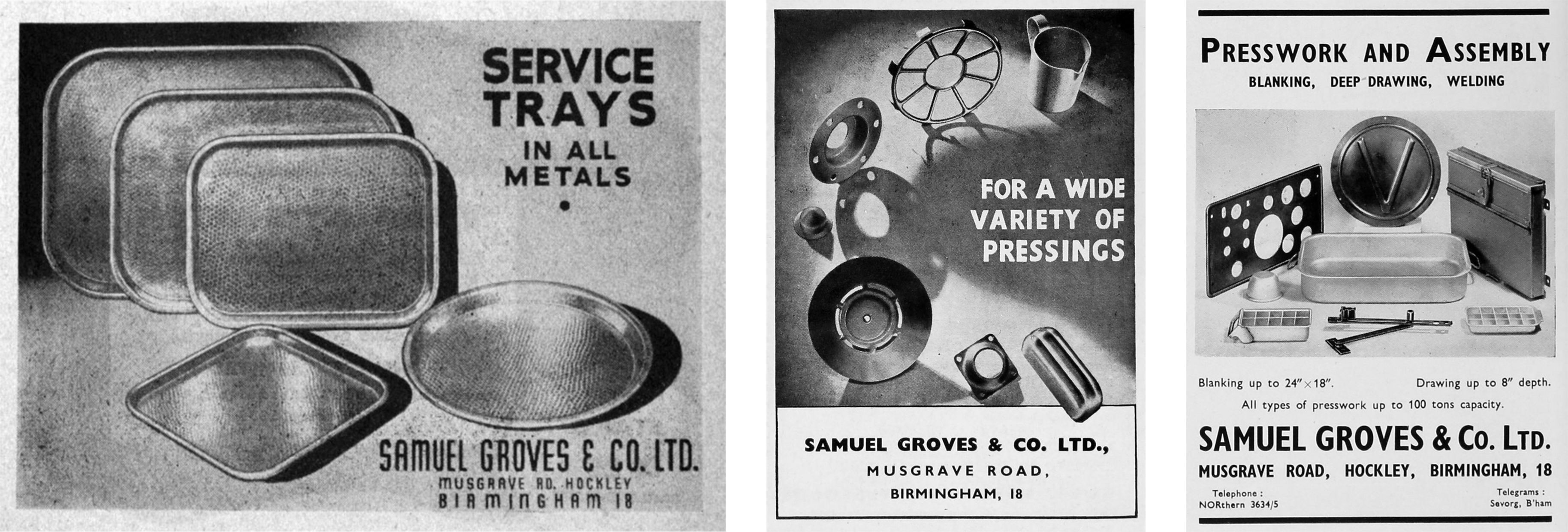
Image © Samuel Groves
Newey & Bloomer Stove Top Kettles
Established in 1879, Newey & Bloomer is one of Britain’s last remaining kettle manufacturers, still producing in Birmingham, the historic heart of British metalworking. Renowned for its iconic whistling kettles, the brand continues to preserve traditional manufacturing techniques, with skilled craftspeople playing a vital role at every stage of production. Each kettle is assembled, polished and finished locally, handcrafted in England using time-honoured copper-spinning methods first introduced in 1903.
Manufactured from premium-grade copper, prized for its outstanding heat conductivity, these kettles are designed to bring water to the boil efficiently while offering decades of dependable use. They are produced in either a rich polished copper finish that develops character over time or a refined mirror-polished chrome exterior that combines classic styling with easy maintenance. The distinctive whistling kettle design and its energy-efficient design were formally patented, with the “Simplex” name officially registered in the 1930s.
The Kensington model showcases a sleek, flat-bottomed design suited to modern gas and electric hobs, while the Buckingham model retains its distinctive coiled base, a feature inspired by early stove-top kettles that today delivers fast, efficient heating on gas cookers. Designed specifically for use on AGAs and other cast-iron range cookers, the Highgrove model incorporates a heavier flat base engineered to maximise heat transfer from solid hotplates. Complementing these classic designs is the Simplex Beehive Kettle, first introduced in the 1950s and quickly becoming a cherished household favourite thanks to its distinctive shape, practicality and timeless appeal.
Bring home a little piece of England - and enjoy the perfect cup of tea for a lifetime.


Image © Newey & Bloomer
Legacy Silverware Cutleware
For cutlery that truly lasts a lifetime, Legacy Silverware represents the pinnacle of British craftsmanship. Founded in 1898 by brothers Albert and Joseph Yates, the company’s origins can be traced through the distinctive JY assay mark first registered at the end of the 19th century. In its earliest years, the business produced specialist decorative caps and ferrules for the fashionable pearl-handled fish eaters of the era, before gradually expanding into the manufacture of knives for the Sheffield Cutlery Industry.
A significant turning point came in 1947, when William Beatson, grandfather of the current managing director, joined the company, bringing extensive manufacturing expertise and helping to shape its future direction. His influence marked the beginning of a strong family legacy within the business. In 1950, his son Alan entered the company at just 15 years old, briefly leaving to complete national service before returning to the trade.
Following William Beatson’s passing in 1961, Alan partnered with Albert Yates to relocate the workshop to its present home on Trinity Street in Sheffield, a site that remains central to the company’s operations today. Over time, the business has remained closely tied to its family roots, with the next generation continuing the tradition through Legacy Silverware.
Today, Legacy Silverware carries forward one of Sheffield’s last remaining working cutlery workshops, preserving generations of craftsmanship while keeping traditional silversmithing skills alive in the city where they began. The factory has built an impressive portfolio of distinguished clients over the years, with its work featuring in some of the world’s most renowned names and institutions, including the Titanic, the British Royal Family, the Sultan of Brunei, Concorde, British Airways First Class, United Arab Emirates First Class, and Fairline Yachts.


